What we do
Grading And Demolition Services
We run seven services out of one yard with the same crew. Grading and demolition take up most of the week, and we do the rest often enough to be good at it.
Pick what you need below, or just call and tell us what’s going on. We can usually work out what the job is over the phone.
Residential and commercial
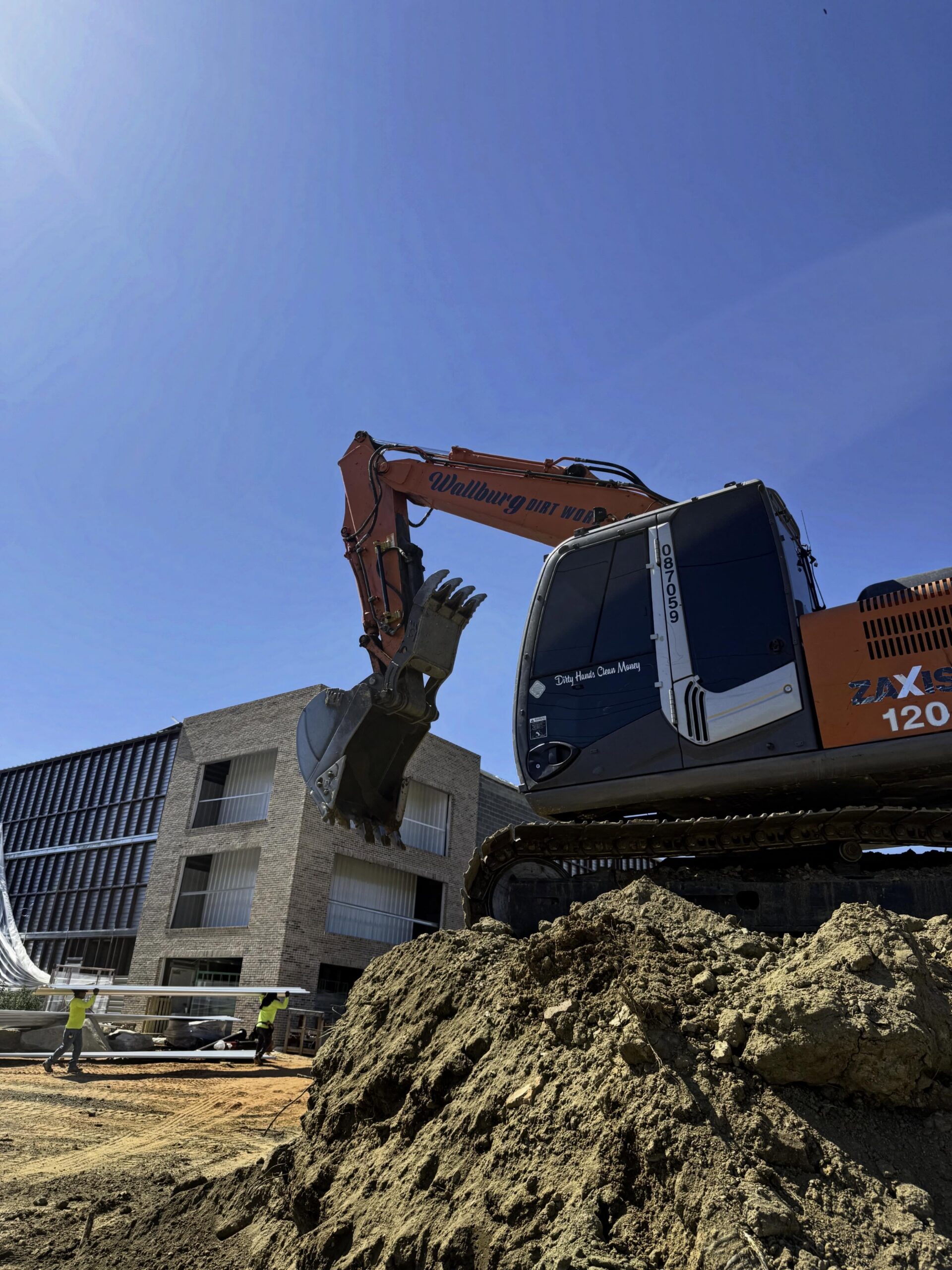
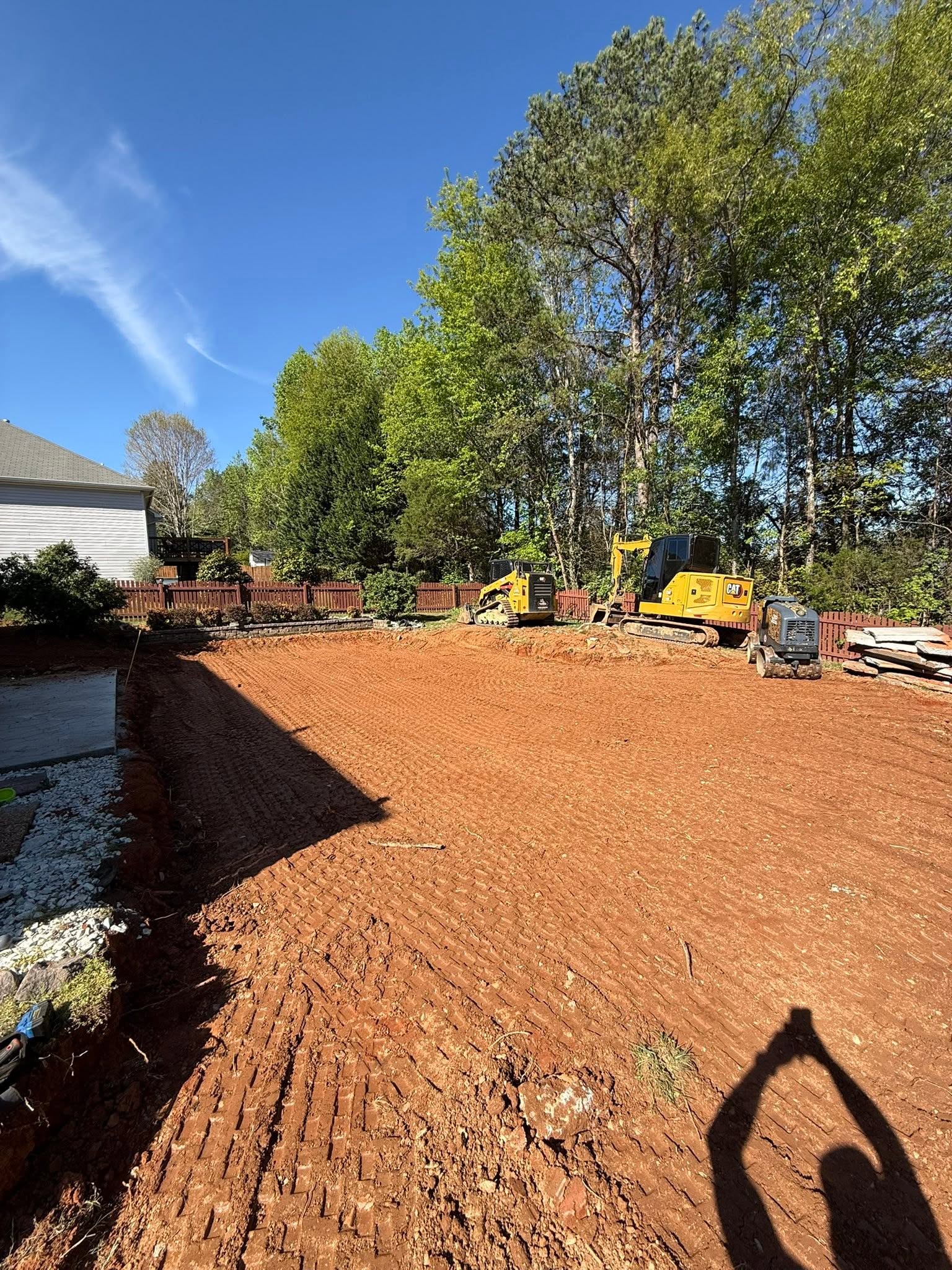
Grading
Grading is reshaping the surface of a property so water runs where it should and the ground underneath is stable enough to build on.
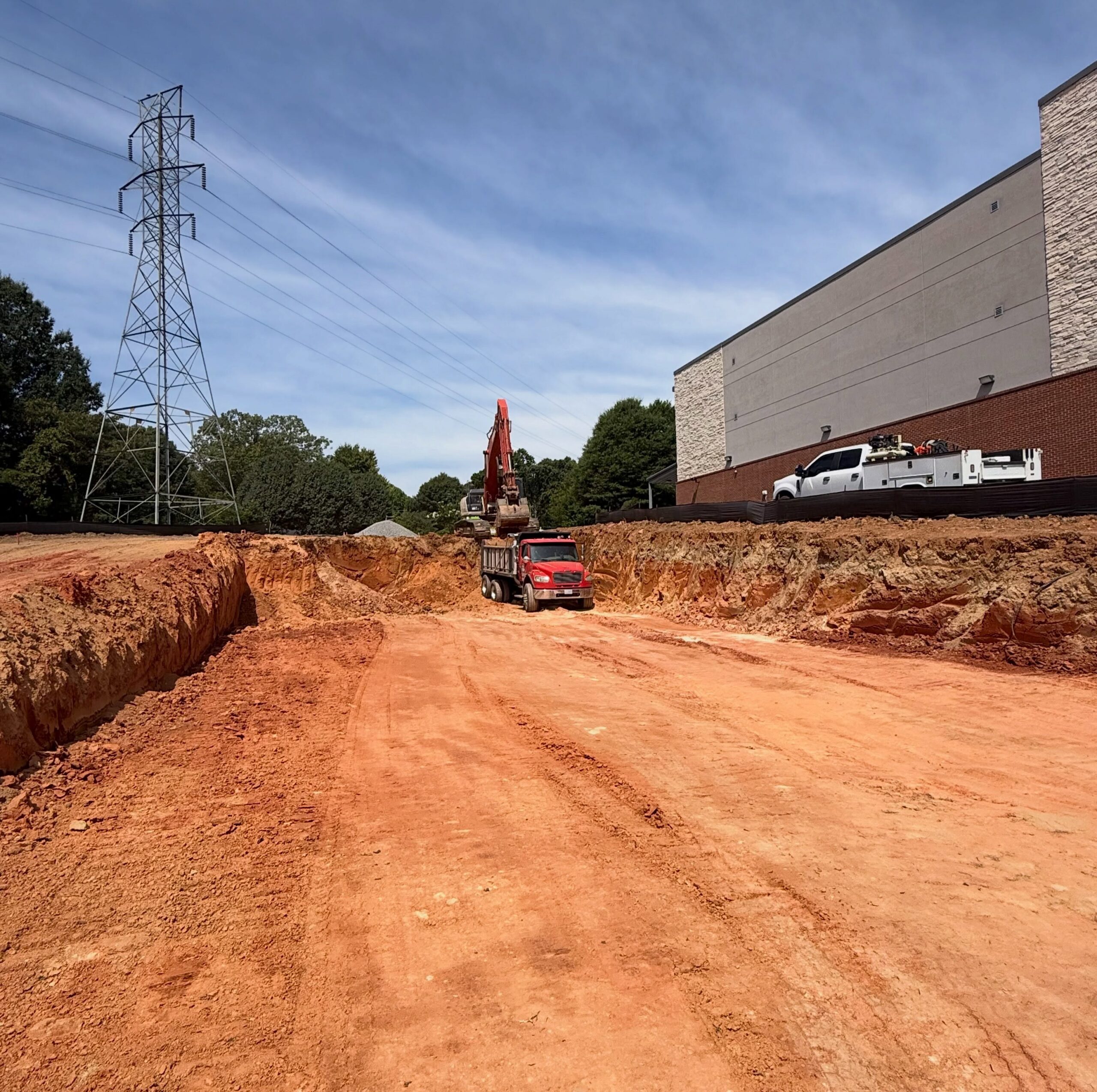
There are two halves to it. Rough grading moves the bulk of the material and sets the shape, elevations and slopes. Finish grading is the last pass that gets the surface smooth, even and ready for whatever goes on top, whether that is concrete, gravel, sod or seed.
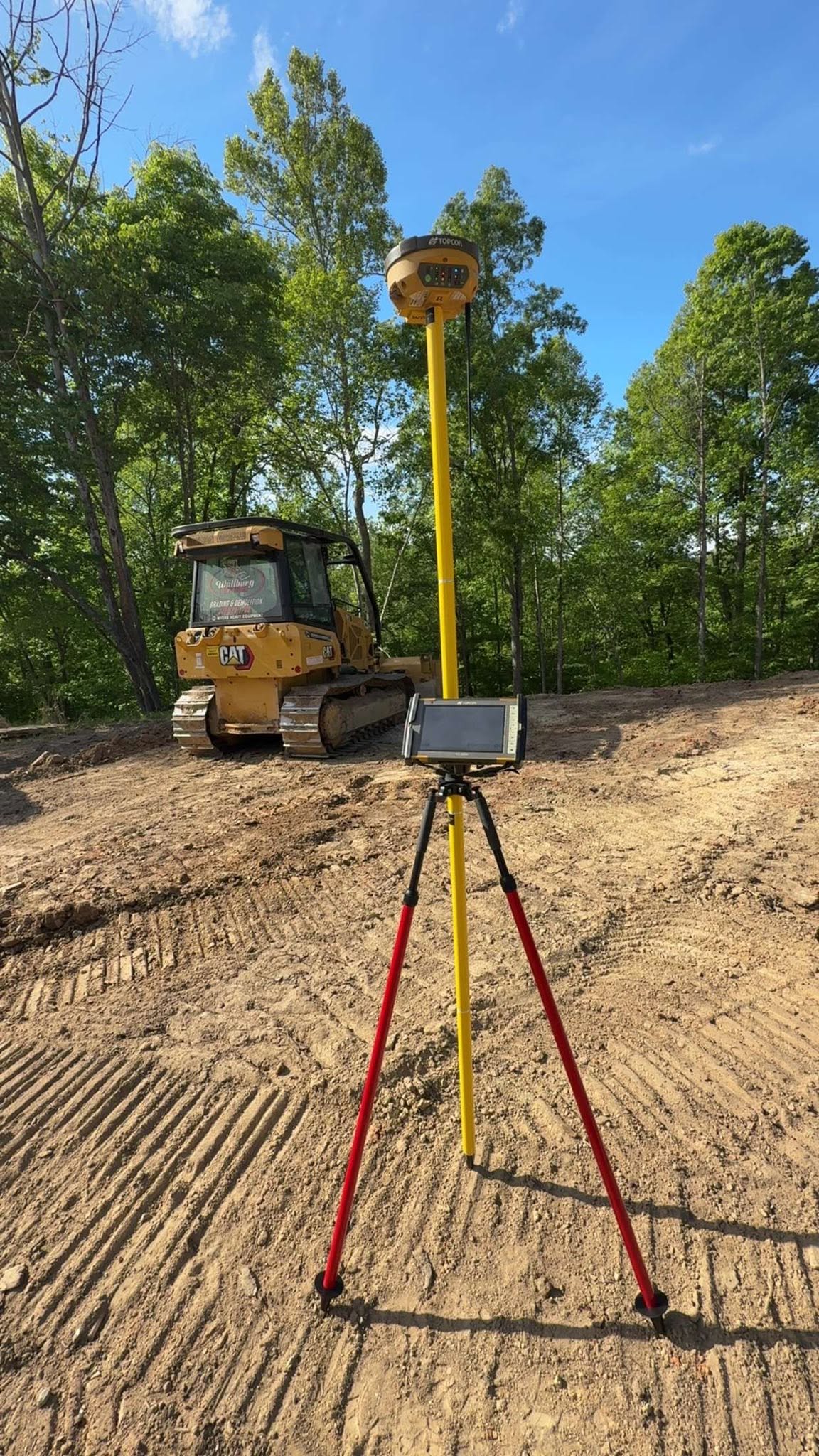
The soil around here makes both harder than they look. It swells when it’s wet and shrinks when it dries, and it holds water at the surface long after sandier ground would have drained. So slopes need more fall than people expect, and fill has to go in compacted lifts or it’ll settle after a season or two. We set grade with survey equipment and check it again before we pull off.
- Rough grading for new builds
- Finish grading, yards and pads
- Drainage correction and swales
- Cut and fill to plan
- Compaction in lifts
- Building pad prep
If a job disturbs more than an acre, North Carolina wants an approved erosion and sedimentation control plan before anything moves, and that takes about thirty days. We’ll tell you at quote stage whether yours crosses that line, and we handle the paperwork if it does.
We get cover down on anything exposed before we leave. Bare graded soil won’t hold up to a Piedmont thunderstorm, and one heavy rain can undo a week of work.
Residential and commercial
Demolition
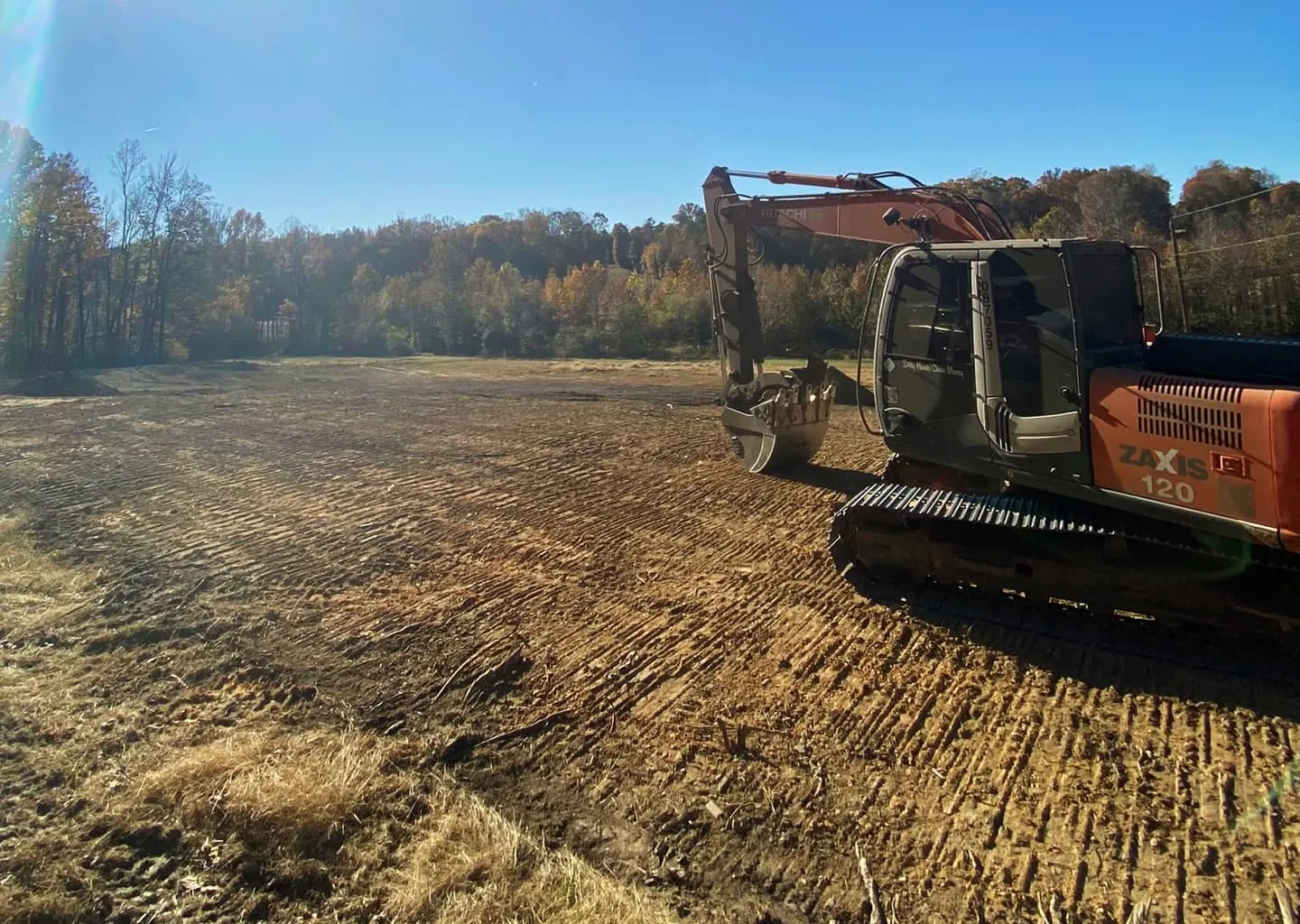
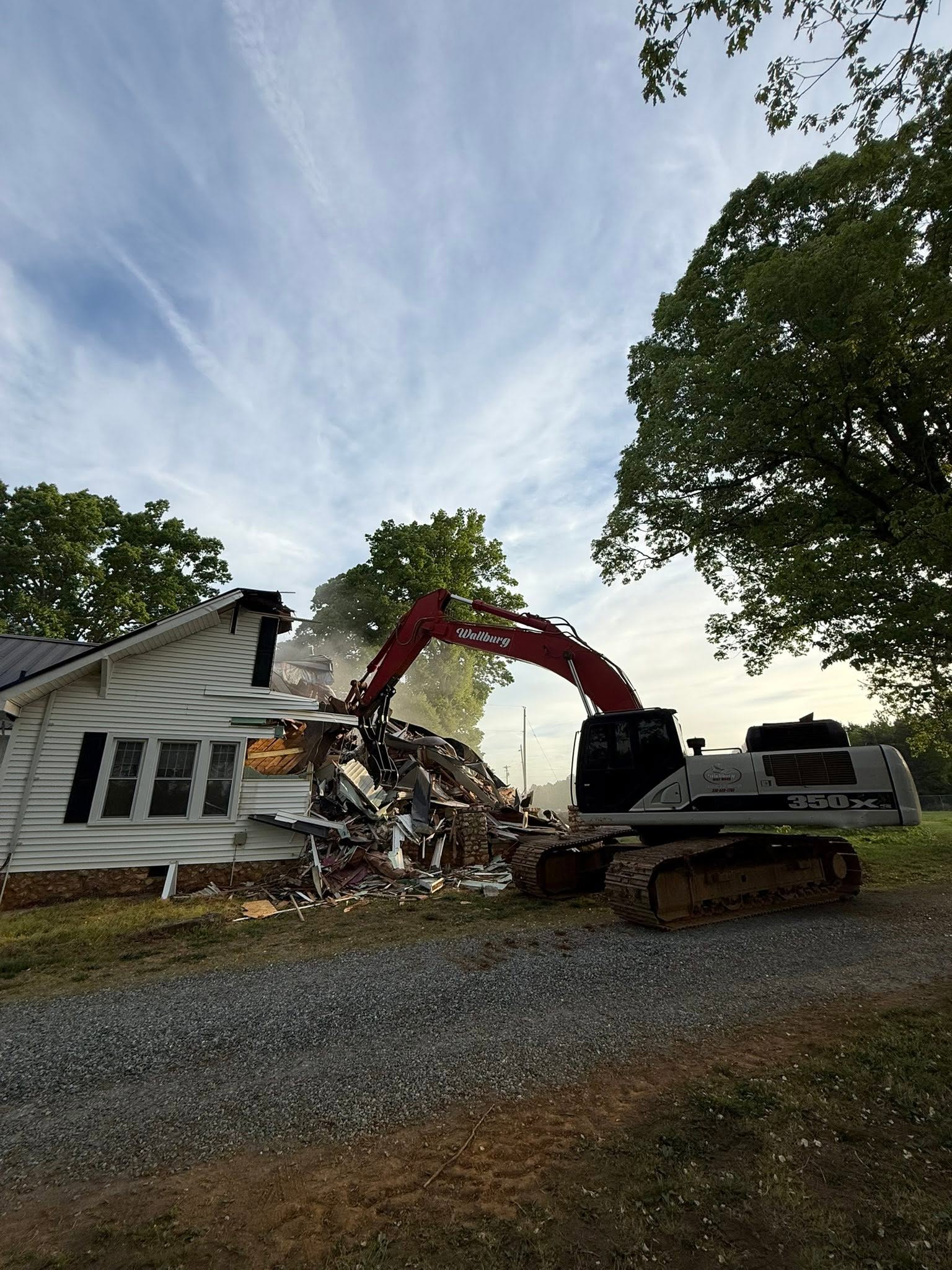
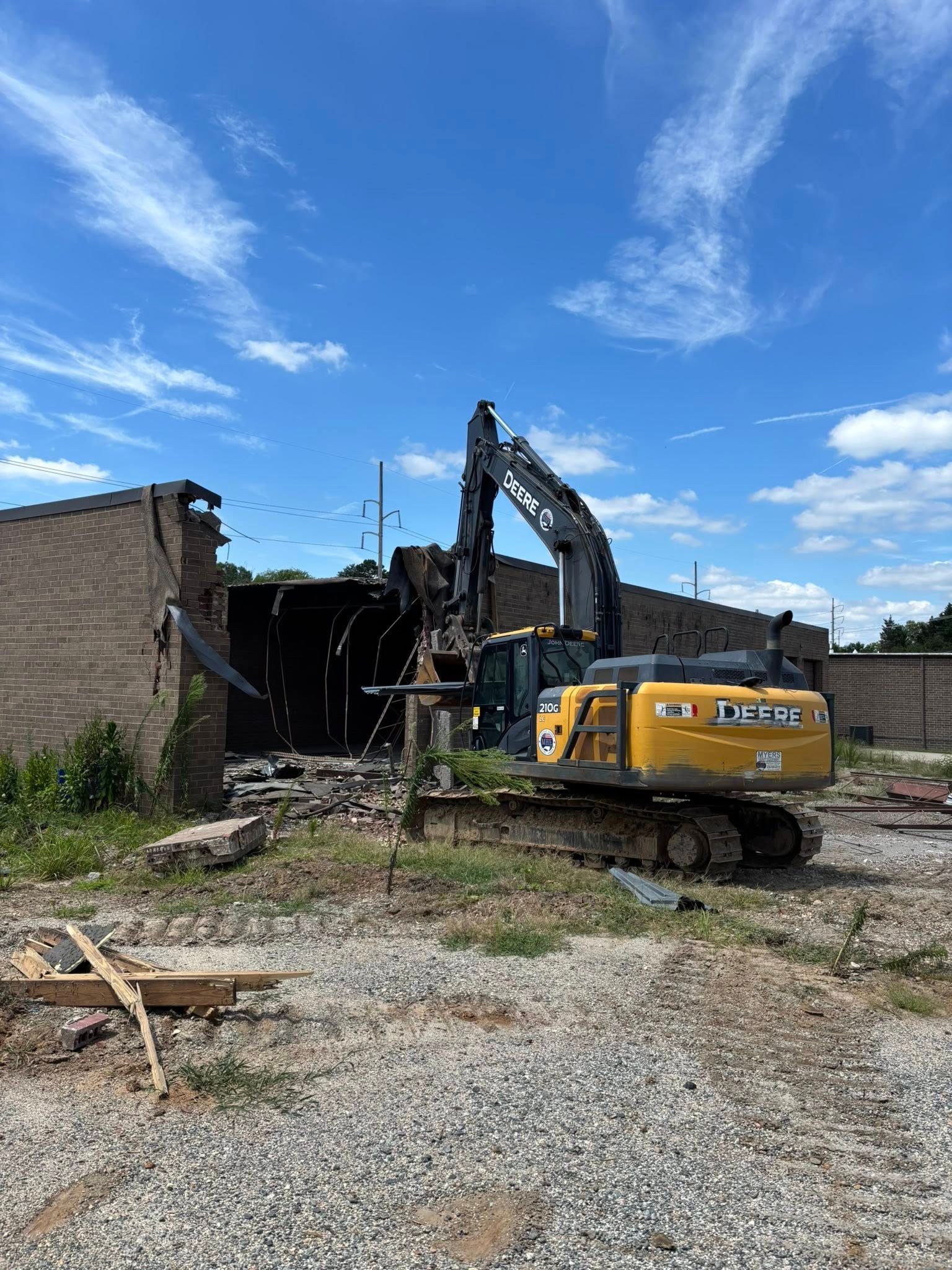
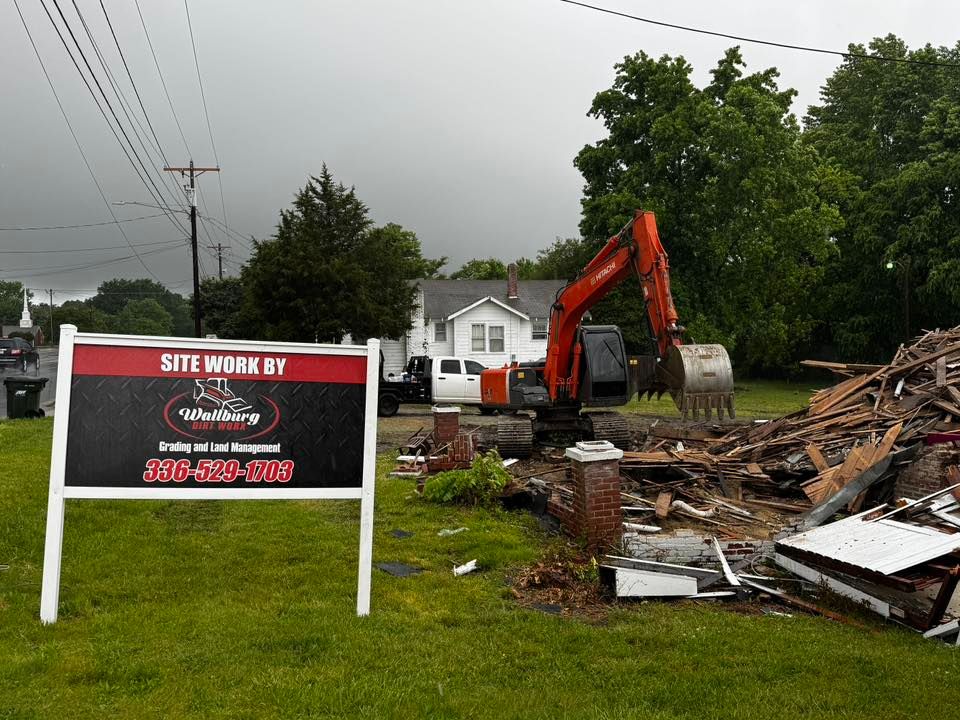
We take structures down, load the debris out, and leave the ground clear and rough graded so you can do something with it.
Houses up to ten thousand square feet, mobile and manufactured homes, barns, sheds, outbuildings and commercial buildings. Pools get removed and backfilled. We take slabs and foundations out too, instead of burying them for somebody to find later.
A lot of it comes down to doing things in the right order. Utilities get disconnected and verified, the structure comes down in a controlled sequence, debris gets separated where that saves you money at the scale, and the site is graded flat before we leave.
Common reasons people call
- A structure that has become a liability or a safety problem
- An old building standing where the new one needs to go
- A condemned or fire damaged property
- A pool nobody uses and everybody worries about
- A barn or outbuilding past saving
- Single family homes, any size
- Mobile and manufactured housing
- Barns, sheds and outbuildings
- Commercial buildings and warehouses
- Pool removal and backfill
- Foundation and slab removal
Demolition in North Carolina carries a lead time. The state wants a notification ten working days before the machine touches the building, and an inspection by an accredited asbestos inspector before that, whether or not there’s any asbestos in it. That’s all our side of the job. Tell us early and we’ll start the clock so it doesn’t hold your schedule up.
Debris goes to a permitted construction and demolition facility. Clean concrete and brick can often be separated out. That brings the tipping weight down, and you’ll see it in the price.
The rest of the work
Everything Else We Get Called For
Grading and demolition take up most of our week. These five fill in the rest, and they run off the same trucks with the same crew.
Land Clearing
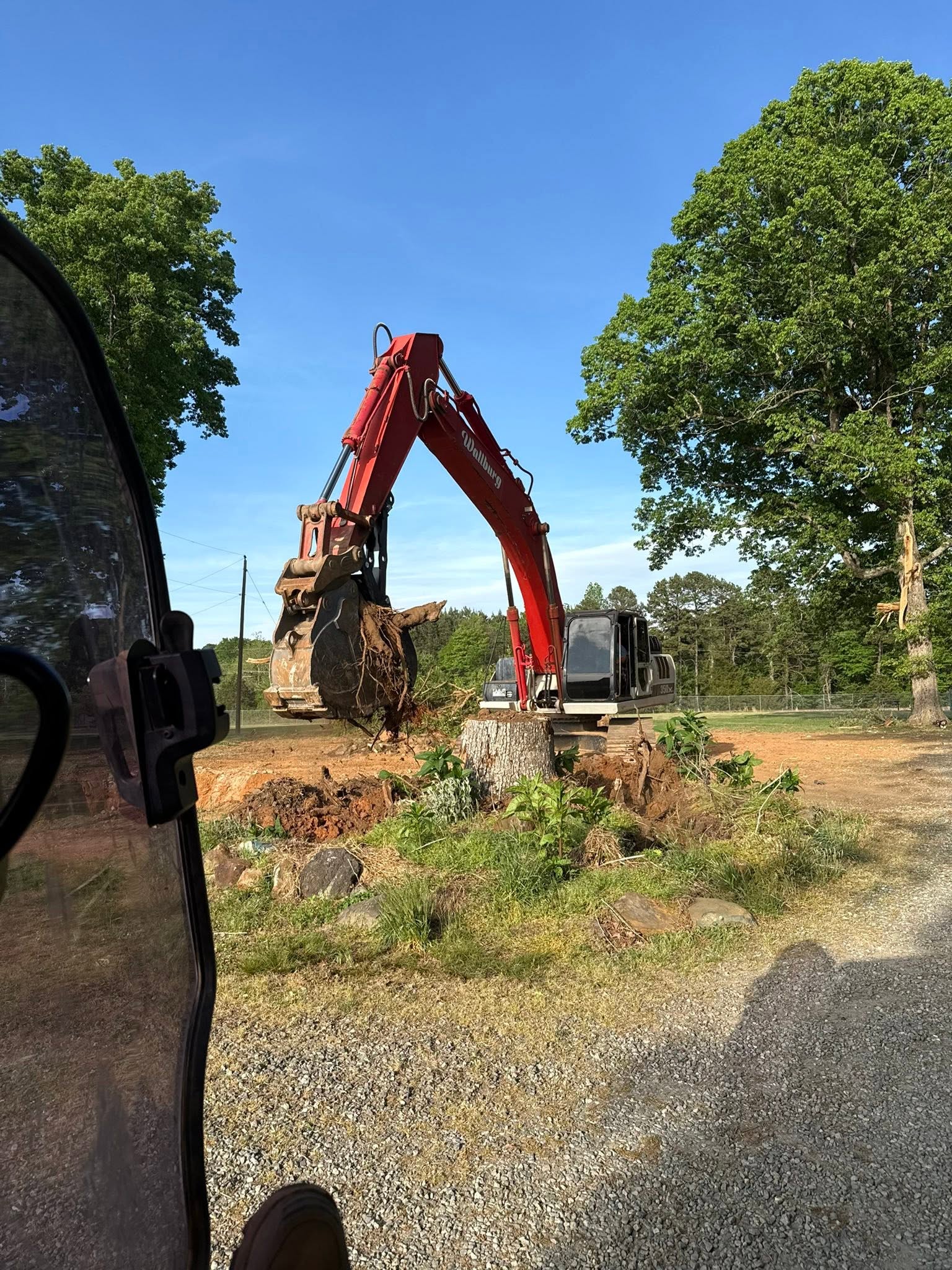
Land clearing is taking off the trees, brush, stumps and undergrowth so a property can be used or built on.
Pasture that’s gone back to scrub, a wooded lot that needs a building site cleared, a fence line nobody can walk. We pull stumps out instead of cutting them flush, because a buried stump turns into a hole a couple of years later. Agricultural and properly managed forestry work is often exempt from the state erosion rules, and we’ll tell you if yours is.
- Trees, brush and undergrowth
- Stump removal and grubbing
- Pasture and field reclamation
- Building sites and fence lines
- Debris hauled off or piled on site
Site Development And Building Pads
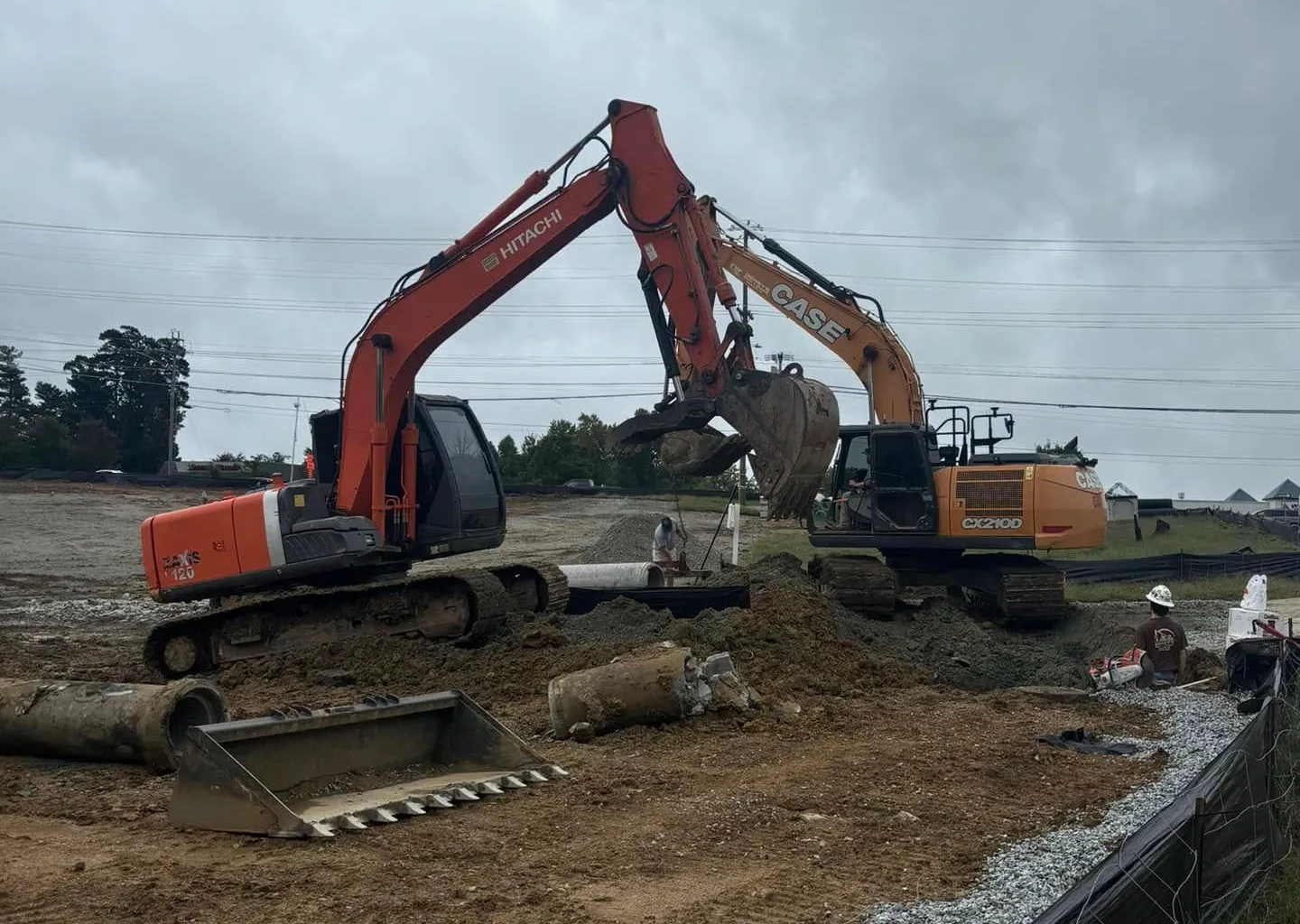
Site development is everything between raw ground and a pad a builder can pour on.
Cut and fill to the civil drawings, subgrade prepared and compacted, access built so the trades can get on site, and drainage roughed in before anybody frames anything. We work to plan, and we’ll tell you early if what’s drawn doesn’t match what the ground is doing.
- Cut and fill to plan
- Building pads, compacted
- Parking lot subgrade
- Erosion control
- Utilities, storm, water and sewer
Erosion Control
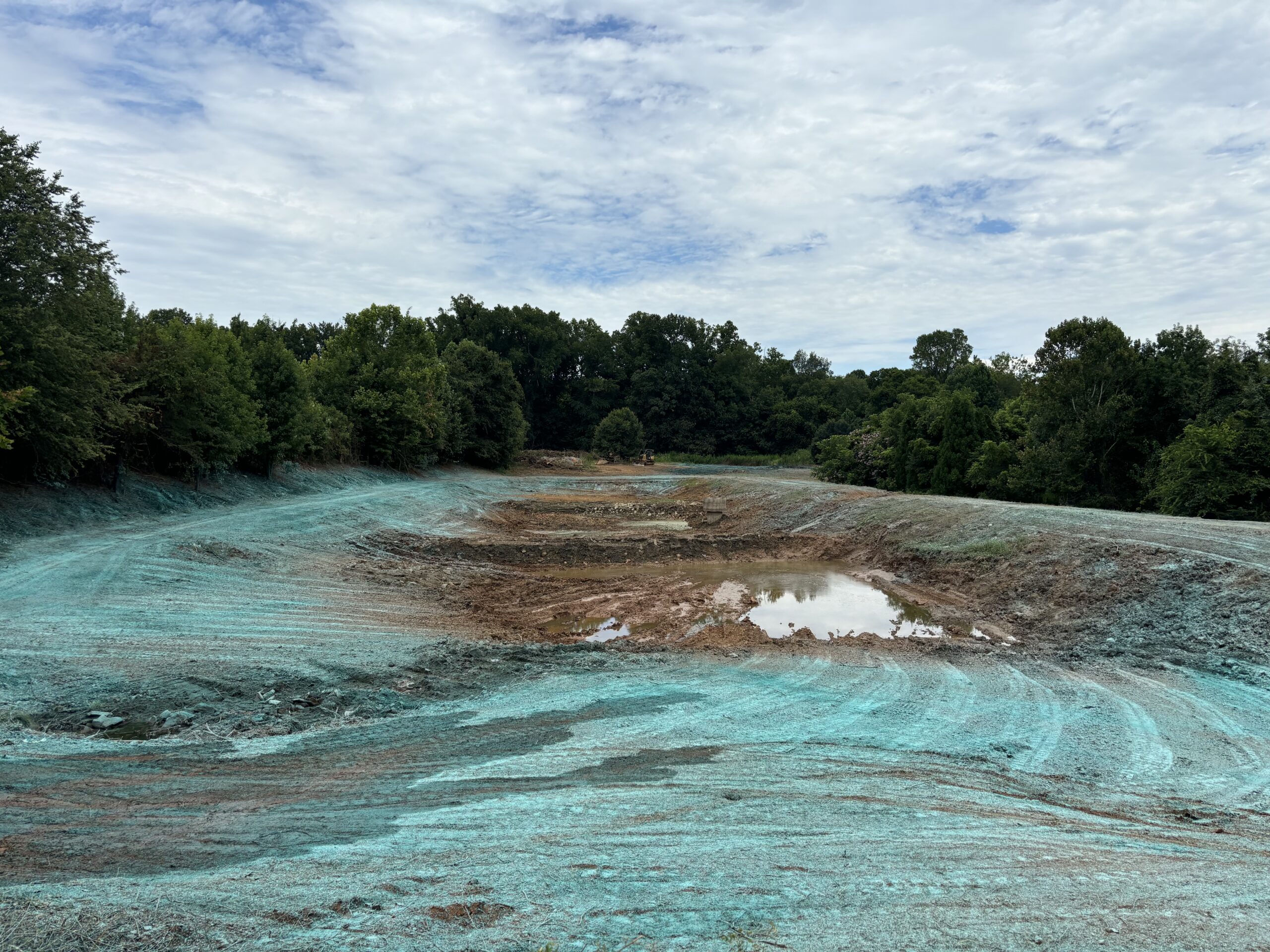
Erosion control keeps soil on your site and out of the ditch, and above one disturbed acre it stops being optional.
Silt fence, straw wattles, inlet protection, check dams and stabilization. North Carolina wants permanent groundcover down within fifteen working days of finishing a phase, so seeding, hydro seeding and matting are part of the job. We keep an eye on all of it as the work goes on, because a silt fence that has blown over is not doing much.
- Silt fence and straw wattles
- Inlet and outlet protection
- Check dams and diversions
- Seeding, hydro seeding, matting and stabilization
- Maintenance through the job
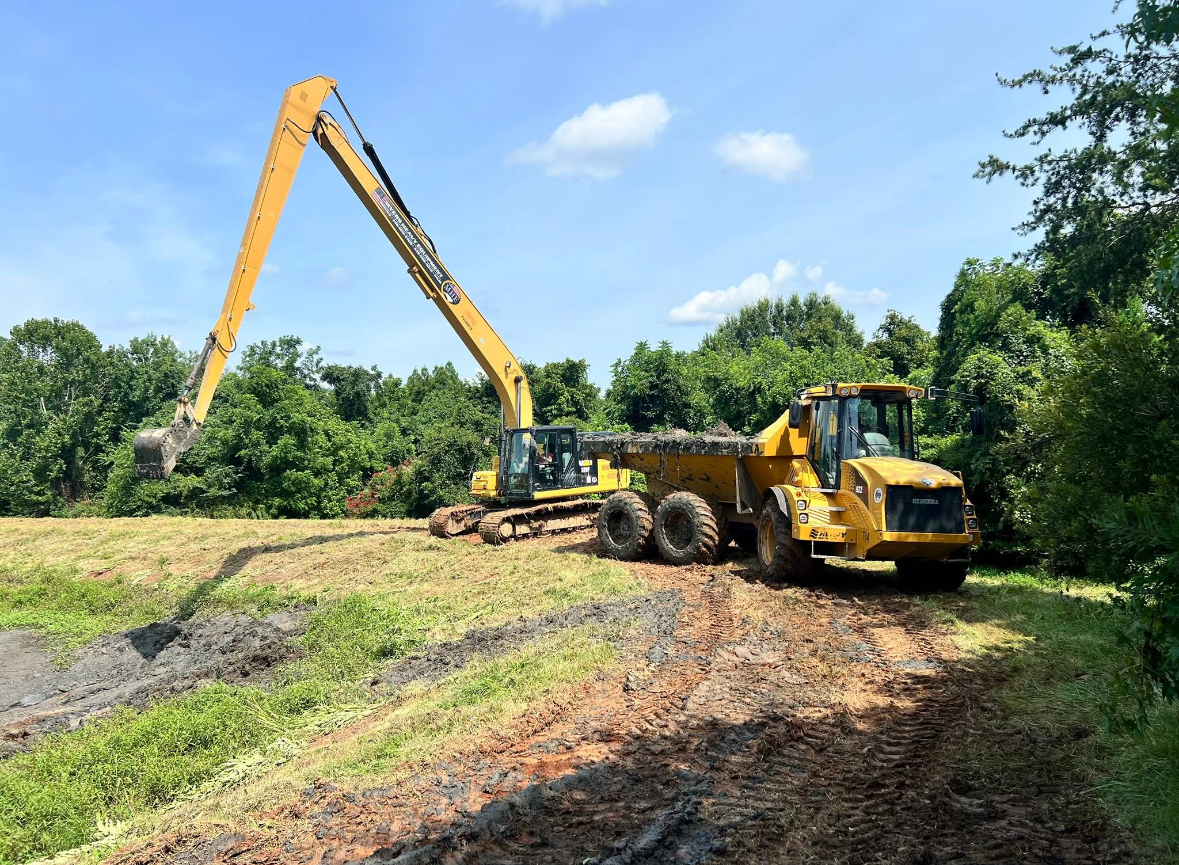
Pond And SCM Maintenance
We build, clean out and repair ponds, and we keep sediment control measures working through the life of a job.
Ponds silt up, banks slump and outlet structures block. We dig them back out, reshape the banks and get the water moving the way it was meant to. On active sites the same crew keeps the basins, traps and outlets clear, since a basin that’s full of silt won’t catch any more.
- Pond construction and reshaping
- Silt and sediment clean out
- Bank repair and stabilization
- Sediment basin and trap maintenance
- Outlet and riser repair
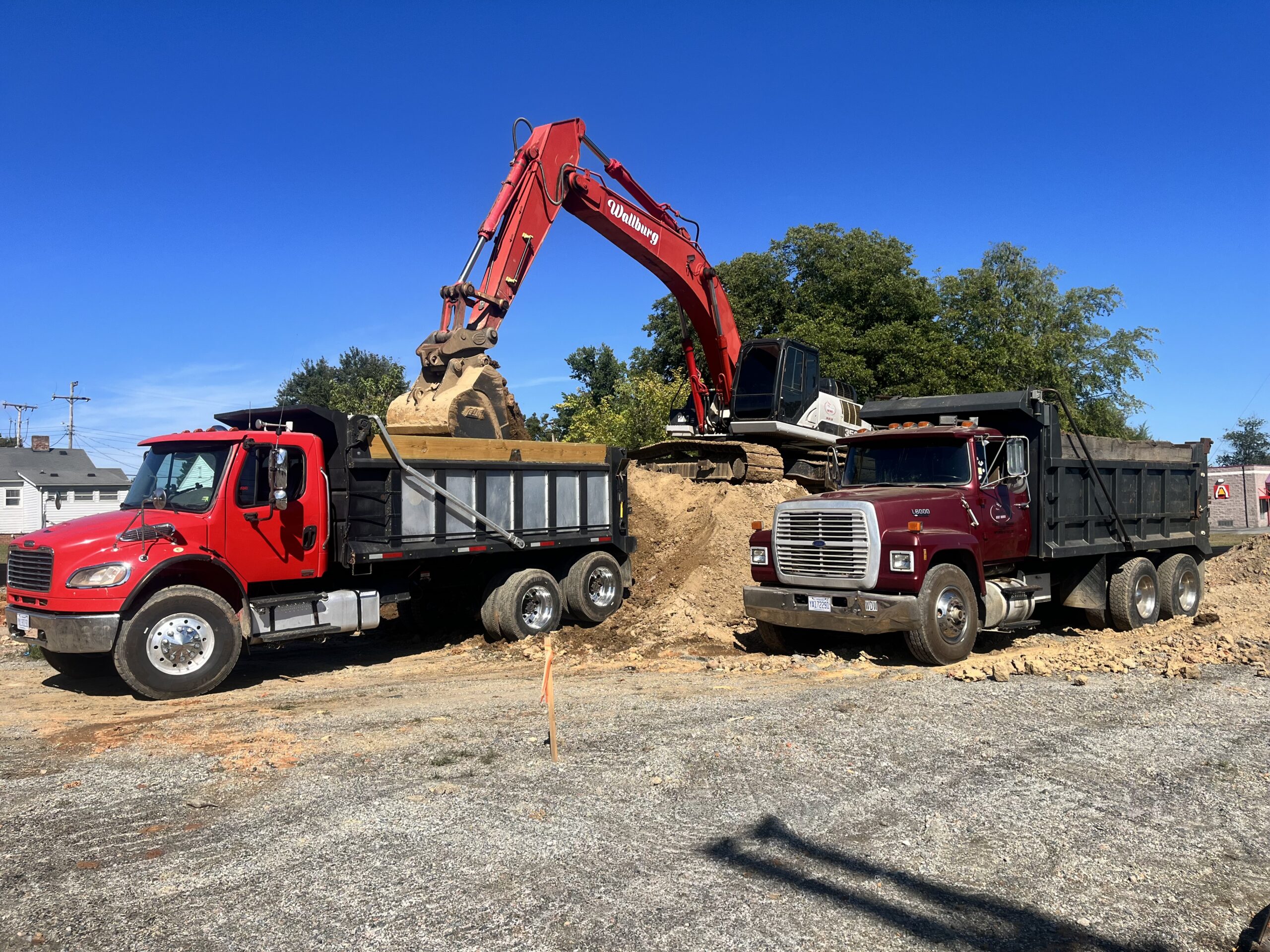
Hauling
We move material on and off site with our own trucks, hauling out what needs to go and bringing in what is needed.
Excess dirt from a cut, rubble from a teardown, brush and stumps off a clearing job. It goes out with us as part of the work instead of sitting in a pile. We bring material in as well, so a job that needs fill or stone isn’t waiting on somebody else’s schedule.
- Spoil and excess dirt
- Demolition debris
- Brush, stumps and clearing waste
- Material delivery such as dirt, rock, and mulch
- (hourly hauling)
Pricing, honestly
How We Quote A Job
There’s no square foot rate for dirt work that means much, and anybody publishing one is guessing. Here’s how we actually do it.
Somebody Comes And Looks
Every quote follows a site visit, where we assess site conditions such as soil types, access, vegetation and other existing conditions. No charge for the visit, and you’re not committed to anything afterwards.
You Get It In Writing
A written scope, a timeline, and a straight answer about what could change the number. You’ll see what’s included and what isn’t.
Surprises Get Talked About
Rock, ground that won’t compact, an old foundation nobody knew about. If we hit something we stop and call you before carrying on, so it isn’t a surprise on the invoice.
What moves the number: how much ground is being disturbed, how far material has to travel, what is underneath, whether spoil leaves the site, and whether the job needs a plan or a notification first.
FAQs
Questions About The Work
Do I need a permit to grade my land in North Carolina?
If you are disturbing more than one acre on a tract, yes. The state requires an approved erosion and sedimentation control plan, submitted at least thirty days before any dirt moves and approved before work starts. The state review fee runs $119 per acre or part acre.
Under an acre you usually do not need a plan, but you are not unregulated either. In High Point, for instance, every grading site regardless of size has to take reasonable measures to keep sediment off public and private property. Which office you deal with depends on your city, and there are six different authorities across the ten cities we work in most.
How soon can a demolition start?
Ten working days is the realistic floor, and it is set by the state rather than by our schedule.
North Carolina requires a demolition notification to the Health Hazards Control Unit at least ten working days before the machine touches the building, and it applies even when there is no asbestos present. The building also has to be inspected by a state accredited asbestos inspector first. We file all of it, so the sooner you tell us the job is coming, the sooner that clock starts.
Do I really need an asbestos inspection on an old house?
Yes. North Carolina requires an inspection by a state accredited asbestos inspector before any demolition or renovation, regardless of the age of the building or what anybody expects to find.
A local demolition permit doesn’t satisfy the state requirement. They’re two separate obligations, and mixing them up is how a lot of residential teardowns go wrong.
Can the same crew do the demolition and the grading?
Yes, and it is usually the cheaper way to run it.
A teardown and the grading that follows are two mobilizations if you hire two outfits, and the second crew inherits whatever the first one left behind. We do both, so the machine that takes the structure down is the machine that shapes the ground afterwards. One quote, one schedule, and nobody arguing about who was supposed to deal with the foundation.
Not Sure Which One You Need?
Describe the problem and we’ll tell you what the job actually is. People often call about one thing and it turns out to be something else.